2025 in retrospect
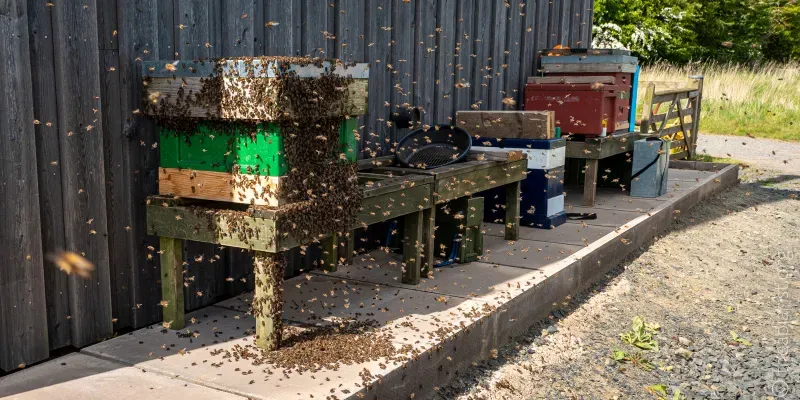
I'm writing this about 3 weeks before the end of the year, listening to the weather reports and watching Storm Bram trundle in from the west. The winds are a zephyr-like 15–20 mph at the moment, but we're predicted to get gusts at least three times stronger later this evening {{1}}.
Forty-six weeks ago, in a rather neat weather 'mirror' sandwiching the beekeeping season, Storm Éowyn delivered 90 mph winds, removed parts of our roof, lofted a large garden chair over the house, and then rushed off to give Norway a pasting.
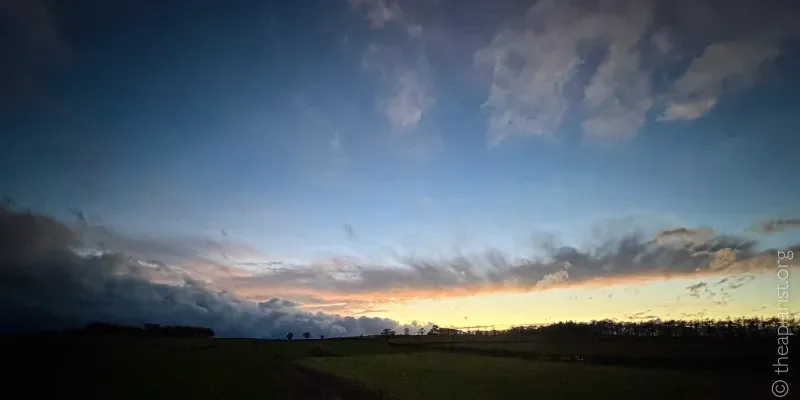
This is my first full year in the Scottish Borders, and high winds appear to be a feature of the area. Having moved here from one of the most westerly — and exposed — regions of mainland Britain, this was a surprise. Partly it's to do with elevation (we're ~140 metres above sea level), and partly it's the adjacent — relatively treeless — Cheviots {{2}}, coupled with the wide floodplains of the Tweed and Teviot.
High winds influenced my search for apiary sites, toppled towering stacks of stored supers (more than once), and created my first practical beekeeping experience of the year … tidying up after Storm Éowyn barrelled through.
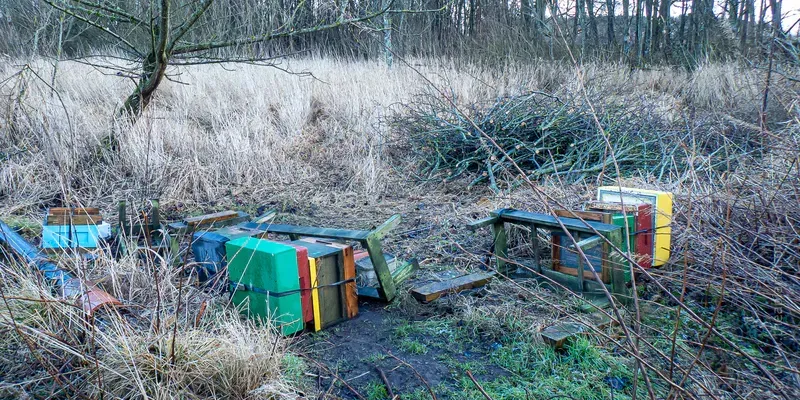
At the time, I still had bees in Fife, so had to drive through freezing rain and snow (and negotiate a lot of fallen trees) to reposition hives toppled in the storm. All but a couple of colonies were tipped off their stands — or tipped over with their stands — but the hive straps kept everything more-or-less together {{3}}.
One or two hives had been completely upended, leaving the colony exposed to hours of freezing rain through the open mesh floor.
They survived.
It always amazes me how resilient honey bees are.
The same, but different
I've been beekeeping in Scotland long enough to broadly know what to expect from the season. However, as I've repeatedly emphasised on these pages, what really influences the beekeeping is the weather and the ~80 km2 around the apiary. This is the area the bees forage over, so what's available for them — and when it's available — determines how the colonies fare.
And, from year to year, the weather will vary, so even the same location will produce different challenges and outcomes in successive seasons.
The 2024 season in the east of Scotland was, except for a glorious month from mid-July, depressingly soggy. The spring honey was no better than average, the queen rearing from May to early July had been a disaster, and I feared it was going to be a shocker of a season. But late July and early August were sublime, and I extracted almost 300 kg of summer honey from nine production colonies.
But almost all these colonies were sold off in the spring of 2025.
So, not only was I now living in a new area, but my focus was going to be making bees, not honey, this year.
Fortunately, we had a much better year for queen mating than 2024. In fact, for week after week we enjoyed unusually good conditions for queen rearing 😄.
In contrast, honey yields languished somewhere between disappointing and dismal. Other than a rather underwhelming crop from the heather, and a bonus few supers of Phacelia — both in September — my only contact with honey has been jarring, labelling and selling almost everything from last year.
Whilst it might look prescient to have chosen to 'make bees and not honey' in a season which was great for queen mating, but grim for honey production, it was actually just dumb luck.
Again.
So, what have been the highs and lows of the season? What worked, what didn't? What lessons have been learned?
Assuming any have been learned 😉.