Hangry bees
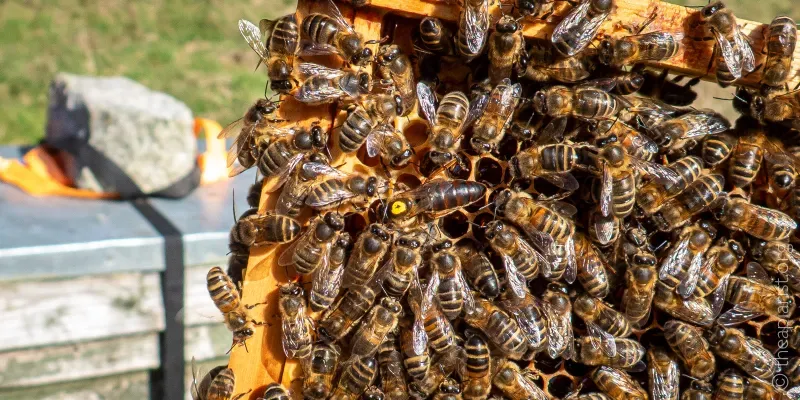
On a lovely late spring morning in the apiary, there's nothing better — having completed your colony inspections — than sitting in the warm sun, drinking tea, and watching the bees go about their business.
The youngsters taking their first spiralling orientation flights, the nectar-laden foragers landing heavily at the hive entrance, and the bees returning carrying 'saddlebags' stuffed with brightly coloured pollen.
It's a magical sight.
Ten minutes ago you were hunched over the brood boxes, searching intently for early signs of swarm preparations. Now, it's as though you never opened the boxes. The bees appear completely oblivious to your presence.
At least, that's what it should be like.
Unfortunately, reality isn't always so accommodating.
Sometimes the bees are agitated by your arrival, irritated by the inspection, aggressive throughout, and menacing for ages afterwards … preventing you from taking the veil off, let alone sitting quietly with a cuppa.
In fact, encouraging you to vacate the apiary for somewhere (anywhere!) friendlier ASAP.
What are the causes of aggression in bees, and how are threats perceived and responded to?
More specifically, why is it important to distinguish between the three major triggers of defensiveness in bees … and what are hangry bees?