Supersedure, clean water and mimicry
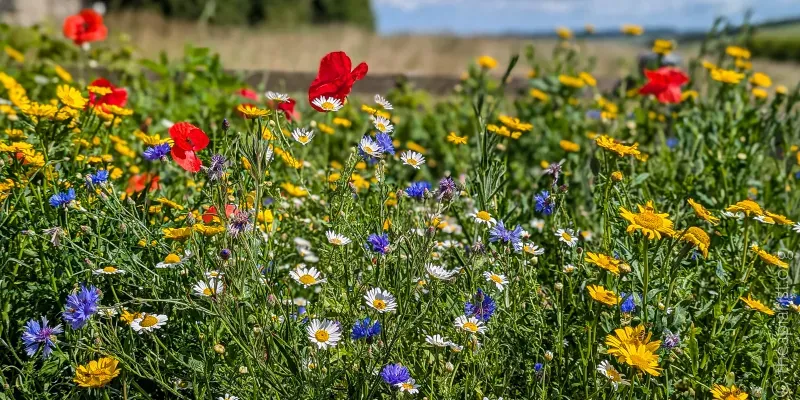
There is a little more than a fortnight to go until the winter solstice. The 'winding down' from the last beekeeping season should be more-or-less finished, and the 'winding up' for the season ahead has probably yet to start.
Of course, if you're anything like me, the 'more-or-less finished' probably won't be until the 2026 season is underway 😔.
“Better late than never” and “If it's not done, it probably didn't need to be done” are phrases worth remembering.
Nevertheless, despite the 'must do' and 'should do' winter beekeeping chores that are still pending, this is a quiet time for beekeepers in the Northern Hemisphere.
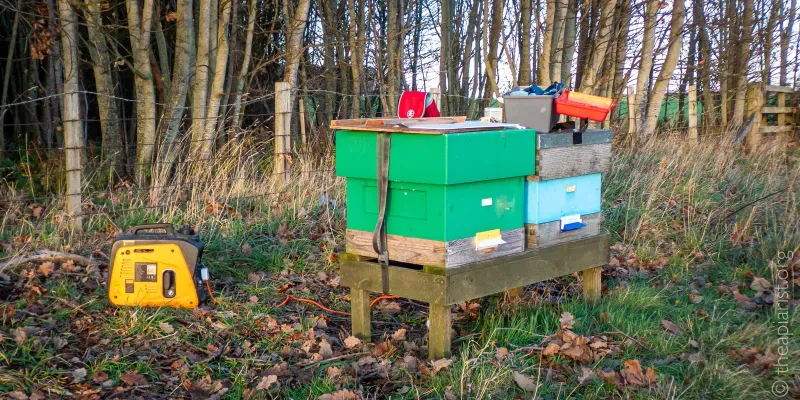
The hives are heavy, the entrances are clear, the oxalic acid treatment is completed, and everything is trapped down tightly for the coming winter storms. For the next 2–3 months all I will do is periodically check the hives, hefting them to determine they have enough stores.
If I'm feeling really enthusiastic I'll slide a white Correx tray underneath the open mesh floor for a day or two to determine if brood rearing has started again in earnest. I don't need to do this, but it's nice to know what's happening inside the box during these cold, dark, damp, days.
But the majority of my time is spent away from the bees, or any practical beekeeping.
Sometimes I just sits and thinks …
Although I'm away from the bees, it doesn't mean I'm not thinking about bees and beekeeping.
With the wood-burning stove flickering warmly, a notepad, the laptop, or my hive records to hand, and a rehydrating mug of coffee/tea/wine close by {{1}}, I sit and think about the bees.
Can I repeat the successes of seasons past?
How do I avoid the (many) failures?
And, as an ex-scientist, it's interesting to consider how recent scientific advances in our understanding of honey bees might inform practical beekeeping.
Or, more generally, whether they help beekeepers understand their bees.
Or, just me, understand mine.
Beekeeping is a very conservative pastime. Our methods have changed little in the last century. Perhaps that's not surprising; the behaviour of the bees — colony expansion, swarming, queen mating, whatever — also haven't changed.
However, our understanding of what the bees are doing, and why they're doing it, has improved.
At least, for the scientists it has improved, though very little has filtered down to beekeepers, and there are few changes to practical beekeeping.
A good example of this (that I've written about before, so won't elaborate here) are the choices made by the colony when rearing a replacement queen … see the posts last spring on 'Bigger queens, better queens' for starters, or my discussion of royal patrilines a few years ago. Most queen rearing strategies date back 60–120 years, singularly ignoring knowledge acquired in the intervening period.
… and sometimes I just sits
'Sometimes I sits and thinks, and sometimes I just sits walk the dogs and think'. {{2}}.
Not all thinking is done in front of the fire with refreshment close by, sometimes it's good to get out.
On a bright morning, with the wind rustling the leaves remaining on the beech hedges, and chattering flocks of fieldfares leapfrogging down the lane in front of us, I pondered a recent scientific paper on supersedure.
Supersedure was in my mind for two reasons. I'd applied oxalic acid (actually Varroxal) to my 'two-queen' hive the previous afternoon, and I'd recently read a paper describing a causative association between virus infection and supersedure.
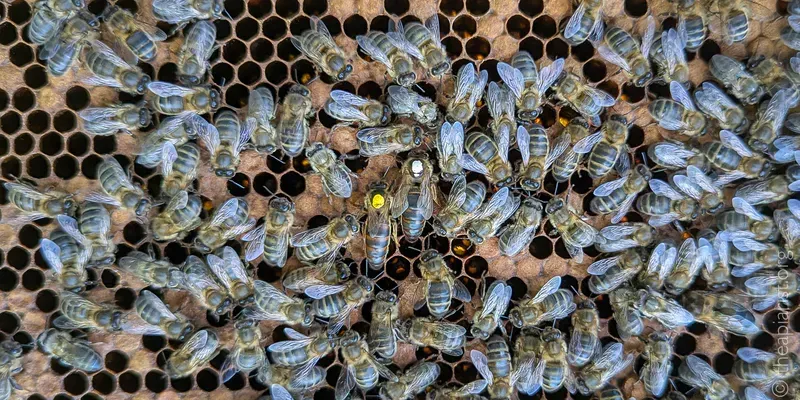
The 'two-queen' hive resulted from supersedure in mid-May this year. Both queens, which co-existed in the hive from May until my last inspection of the season in August, were produced when the original queen was superseded (at one point, there were three marked queens in the hive).
Coincidentally — or was it? — this was the only hive in which I saw a bee with the characteristic symptoms of DWV infection all season.
So, in this lull between (not) completing the autumn beekeeping chores, and starting preparations for next season, here is a brief discussion on three recent scientific papers related to bees or beekeeping … starting with viruses and supersedure.
Sponsors get more … posts, news, and information on the science, art, and practice of sustainable beekeeping. They also have access to over a decade of legacy posts, and ensure The Apiarist continues to appear every week.