Swarm-ready?
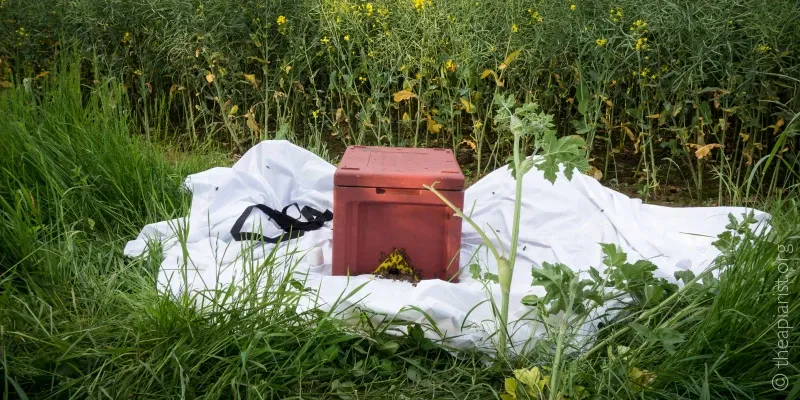
Well, are you?
It seemed that no sooner than I'd pressed the 'Submit' button on the post last week, that regular reader Frazer commented that there were already swarm cells in Kent. By the end of the month there were reports of swarms lost in Hampshire.
By the time this post appears the 'swarm front' will have crept further north. Many more readers will be discovering how prepared — or otherwise — they were for the swarm season this year.
Queen cells will have been found, queen cells will have been missed, and swarms will have been lost.
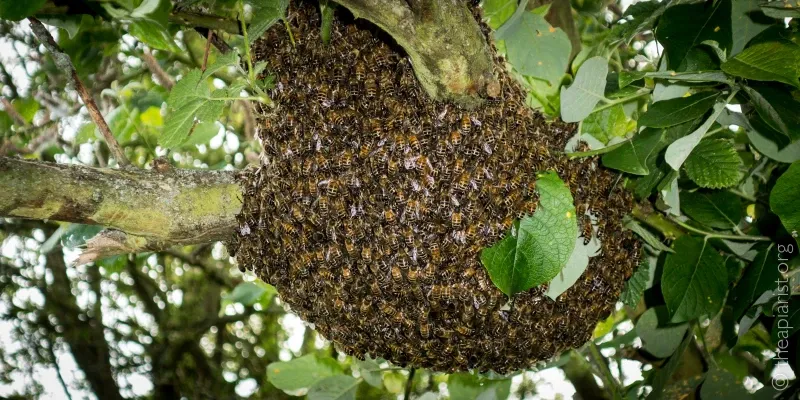
Beekeepers will have wandered down to the apiary, idly pondering if it was time to add a super, and — to their surprise — found a bivouacked swarm hanging in a nearby bush.
Oops!
Or — both a surprise and a disappointment — you discover a much-depleted colony, a dozen sealed swarm cells, and no sign whatsoever of the missing bees.
Any chance of a bumper spring honey crop has disappeared over the apiary fence 😞.
Every year, starting about now, there's a four to six-week period — the swarm season — when swarms should be expected. It's often the busiest time of the year for beekeepers. During this period you need to be prepared both for queen cells in your own colonies, and for swarms in the local environment.
As Benjamin Franklin didn't say “By failing to prepare you are preparing to fail.”
Why not become a sponsor?
Sponsors receive weekly posts on bees and beekeeping, many of which are for sponsors only. Sponsorship costs less than a coffee and a slice of flapjack a month … with discounts for an annual membership.
Go on … you know it makes sense 😄.
In this week's post, I'm going to give an overview of what to look for in your colonies and the equipment you need to deal with swarms that are about to be lost, or the bivouacked swarms you find (or are asked to collect).
Experienced beekeepers will know most of this, so I've also included an update of absconding swarms and re-hiving distances, and of my swarm predictions.