Temperatures and Taranovs
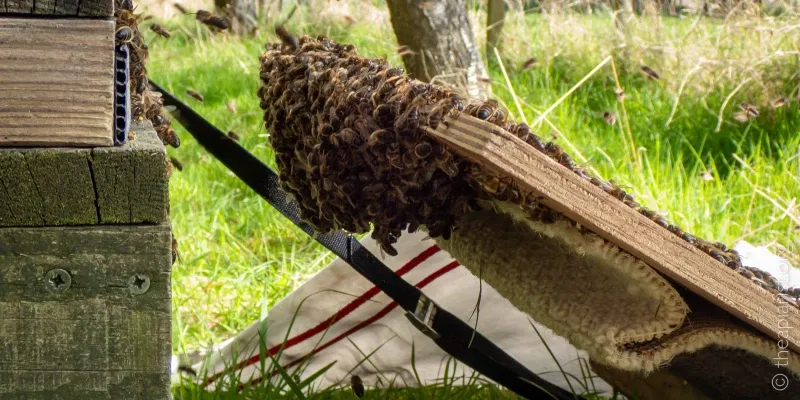
Like many beekeepers, I'm often thinking about my bees at any time of the day or night. But like most beekeepers, I do my beekeeping during the day.
But not just any time during the day.
Most of my beekeeping is done between late morning and mid/late afternoon.
That's a 6-hour window, or just 25% of the day. During the rest of the time, the bees look after themselves — I don't bother them, at least, not usually.
In temperate regions, other than during a heat wave, that 6-hour period straddles the time when it's a good temperature to open the hives.
And, of equal importance, it includes the temperature at which the bees are much more tolerant of my meddling.
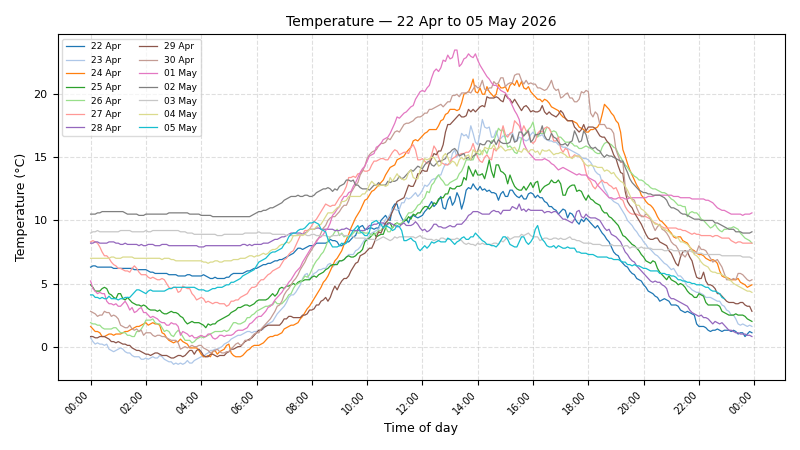
My bees are reasonably well-tempered at the best worst of times, but they're a lot better at 15 °C than they are at 5 °C.
Sponsors get more … posts, news, and information on the science, art, and practice of sustainable beekeeping. They also have access to over a decade of legacy posts, and ensure The Apiarist continues to appear every week.
The timing of my trips to the apiary are therefore determined by my need to do something on a specific date (regular 7-day colony inspections, checking splits for queen cells, feeding the cell raiser) and by the temperature.
If the timing is important, it takes priority. I do whatever is needed irrespective of the temperature.
However, if there's some flexibility in the timing, I look at the weather forecast … and then usually have another coffee before setting off to the apiary.