A beeswax Jenter system
Here's something that caught my eye last week … a Jenter-like system made entirely from beeswax that avoids the need to graft day-old larvae.
The authors report it produces larger queen cells, and bigger, more 'queen-like' queens, than larvae grafted from the same source.
Tempting, very tempting 😄.
The majority of commercially reared queens are produced from grafted larvae, transferred manually from natural comb to a plastic queen cup. These are presented vertically in a queenless cell raiser, fed copious amounts of royal jelly, and eventually emerge as queens.
Amateur beekeepers use similar methods, but some struggle with manual grafting of larvae of less than one day old.
Poor eyesight, unsteady hands, and dodgy hand-eye coordination result in larvae being missed or damaged. Inadvertent compensation frequently leads to the selection of larvae that are too old. Together these result in low acceptance rates or the production of substandard queens.
Jenter and Nicot Cupkit systems
One solution is to use a Nicot or Jenter “cassette system” for queen rearing, in which a caged queen lays directly into plastic cups which are then presented to a cell raising colony. Both are designed to produce numerous larvae of the right age, without the need for grafting.
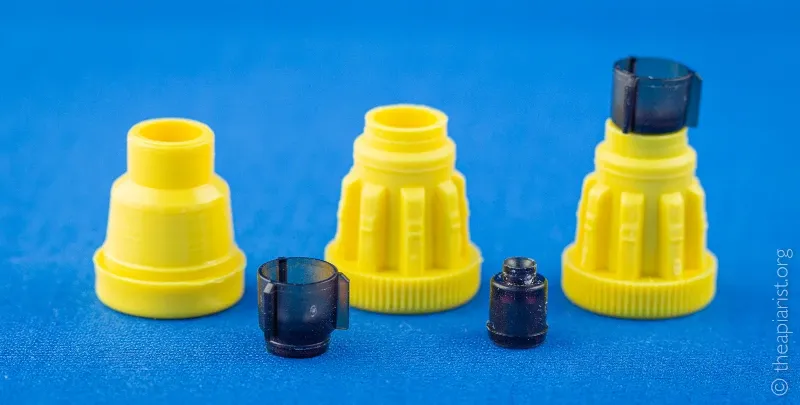
These cassette systems are not inexpensive (the Nicot Cupkit version is ~£75 and the Jenter system is currently £114 😱). An additional drawback is that queens may be reluctant to lay when confined in them.
Beemusings posts are only available to paying subscribers (sponsors) of The Apiarist. Why not sign up and see what you're missing? Sponsorship costs about the same as a large cappuccino a month, with discounts for annual membership.
Recently, some fiendishly dextrous researchers at Jiangxi Agricultural University have produced a Jenter-like system entirely from beeswax. Using it, they demonstrate that the queens they produce appear to be better than queens reared by grafting of larvae from the same original frame.
Sounds good … read on.