Apiguard (Apilife Var & Thymovar) advice
Like anglers, beekeepers often obsess about the weather.
They both need something to blame when things go less well than they had hoped. How many times have you heard “too little rain, no nectar” or “too hot, they weren't biting” ?
Or, to give them the benefit of the doubt, this compulsion healthy concern simply reflects the influence of the weather on their hobby.
I was reminded of this at 7 am today when I listened to the weather forecast … there's another 'heatwave' on the way, but overnight temperatures will be 'feeling a little fresher'.
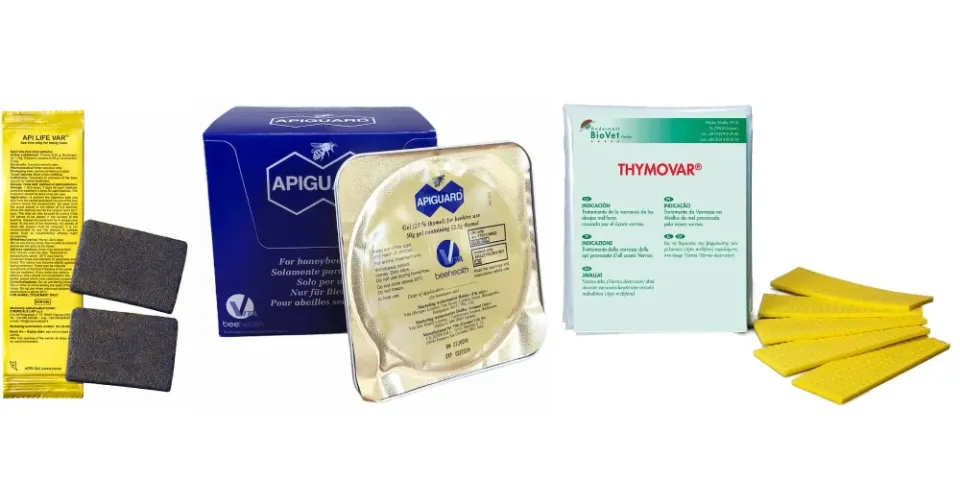
My first thoughts weren't about nectar or fish, they were about the impact these temperatures have on Varroa control using thymol-containing miticides {{1}}. These products include Apiguard (in the UK and US), Thymovar and Apilife Var {{2}}.
For very good reasons — relatively inexpensive, no evidence of resistance, natural and organic, no wax-soluble residues, ease of administration — these are popular treatments. However, many beekeepers do not appreciate the impact the temperature has on their use, or the best way to maximise their miticidal activity.
This post is for paying sponsors only. Sponsors get more … posts, news, and information on the science, art, and practice of sustainable beekeeping. Don't trust those AI-generated advertising sites containing an illogical selection of contradictory beekeeping advice … and, at the same time, help ensure The Apiarist continues to appear every week.
So, in late summer, to avoid having to complain that it's “too hot, the queen has stopped laying”, or “too cold, the miticide won't be working” here's my explanation of how thymol-containing treatments work, when they work (and when/why they don't), and how to ensure they work effectively.