Miti-side-effects
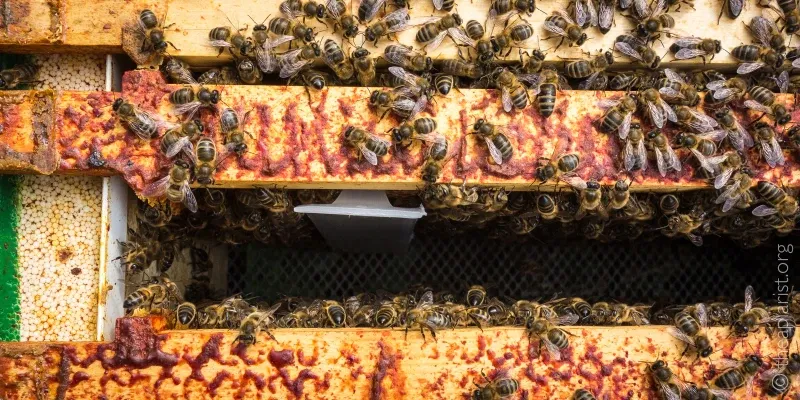
I made the comment last week that all unexplained colony losses are due to Varroa, unless there's unequivocal evidence they are due to something else.
If there are three weeks of rain in November, the stream floods, and you watch impotently as your hives are washed away downstream, I'll grudgingly accept that Varroa wasn't to blame.
However, 'unexplained' losses, in particular the majority of winter losses, are likely due to the detrimental effect of mites and the viruses they transmit within the colony.
This is why I stress that mite management — minimising the mite numbers in the colony — is such an important component of beekeeping.
Some beekeepers appear to be able to achieve this without the use of chemicals, but for most bees and most beekeepers it involves the correct use and application of miticides {{1}}.
Miticides — literally mite killers — are chemicals administered to kill mites and reduce their number in the hive below an acceptable threshold. Because Varroa mites are members of the Acari subclass of the Arachnids, along with ticks, these chemicals are sometimes termed acaricides.
Regulatory approval
Mites, like ticks and bees and beekeepers, are living things, and so share many basic physiological and biochemical processes.
To receive regulatory approval, the benefits of the miticide must outweigh the risks associated with its use. Typically, those risks would be for the bees — that is, the host organism — or the beekeeper, but they could also include environmental risks {{2}}.
A miticide may be very effective at killing Varroa, but if it were highly toxic to humans by trace level contact, it would not be approved.
Although many products have received regulatory approval, the range of active ingredients (i.e. the chemical constituent that kills the mites) they contain are disappointingly limited.
This post is only available to paid sponsors of The Apiarist. Sponsors get more … posts, news, and information on the science, art, and practice of sustainable beekeeping. They also have access to over a decade of legacy posts, and ensure The Apiarist continues to appear every week.
There are numerous formulations, some involving combinations, but all belong to one of three types of organic chemicals (formic acid, oxalic acid, thymol), or one of three types of synthetic chemicals (pyrethroids, organophosphothionates, and formamidines).
Almost all approved miticides will kill 90 to 95% of Varroa if used appropriately. In this case, “appropriately” means when administered in the right way, at the right dose, and at the right time.
 David (The Apiarist)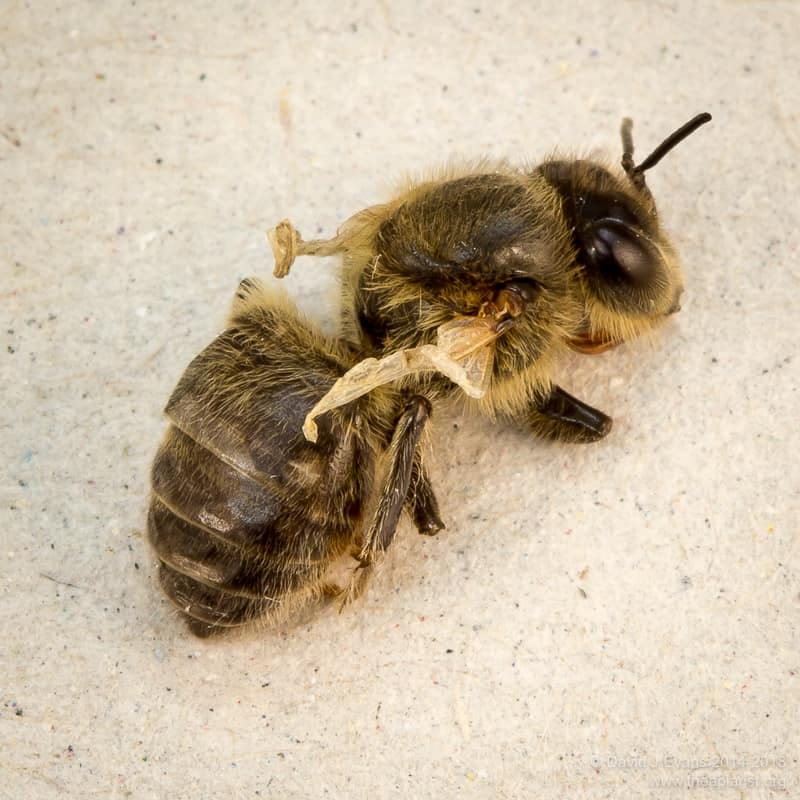
Of these, at least in terms of benefits to the colony, timing is probably the most important. The right dose at the wrong time might be ineffective as far as preventing overwinter colony loss. I've discussed this at length in a previous post titled “Rational Varroa control”.
If used in a manner that kills 90-95% of the mites, timing is much more important than the particular miticide used.
Therefore, it makes sense to take other factors into account when choosing which miticide to use; cost, availability, ease of administration … and the side effects associated with its use.
And there will be side effects.