The 'June gap', brood breaks, and myths
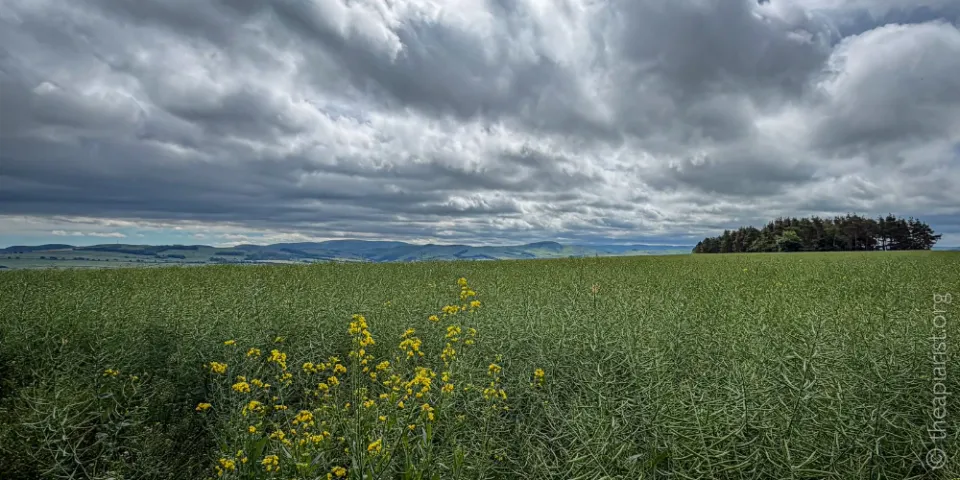
I've just reached the 'and breathe …' part of my season.
This is the period between spring expansion and summer consolidation.
It's the time when I realise I am more-or-less in control of things after all, contrary to all the evidence a fortnight ago.
Colonies are at or near maximum strength.
The urge to swarm has been controlled, contained, coerced … or belatedly overlooked with a resigned shrug.
Hopefully, rather more of the former than the latter.
Apiaries are busy with a mix of production colonies (somewhat less tall now the honey supers are off), splits containing queens being saved 'just in case', and lots of nucs with virgin queens waiting for good weather for mating.
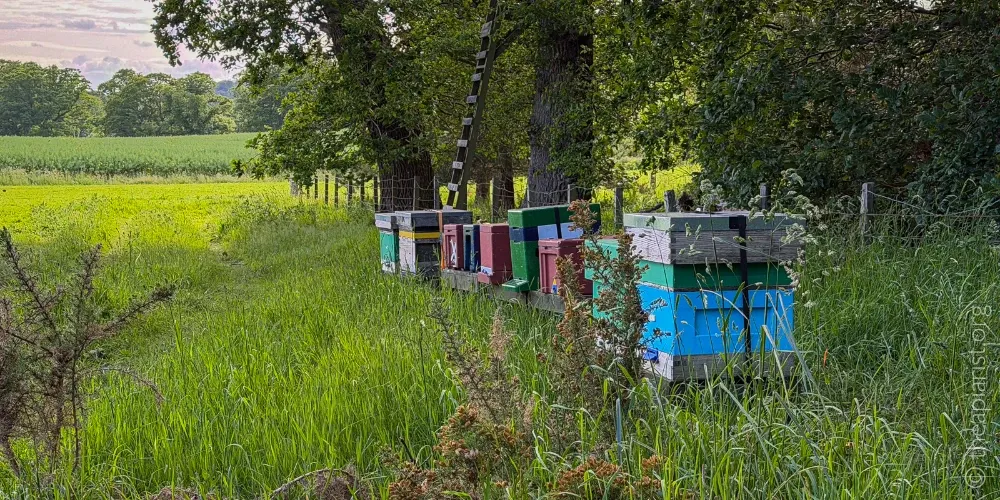
I've almost certainly run out of something or other — supers, clearers, feeders, or frames — but managed to sidestep calamity using a combination of “that'll do botchery”, borrowing and last-minute 'plus P&P' purchases.
Hopefully, rather more of the former than the latter.
After a rewarding but always-frantic four to six-week period, the spring nectar sources largely stop yielding, and what passes for serenity (in my apiaries) arrives.
At least, that's what it feels like to me.
Your-mileage-may-vary (YMMV) … these things are influenced by the climate, the weather and the local environment.
Local bees and local beekeeping
When I lived on the remote west coast there were no 'artificial/agricultural' nectar sources. Colony build-up was slow, and nothing significant happened before the end of June or early July. Queen rearing in May was almost unheard of {{1}}, and many colonies never made swarm preparations, but unfussily replaced their queens by supersedure in August or September.
However, the majority of my beekeeping — in the Midlands, Fife and (now) the Scottish Borders — has been in rich agricultural areas, with the 'boom and bust' availability of nectar, particularly oil seed rape (OSR) {{2}}, determined by soil/climate suitability, demand and current subsidies.
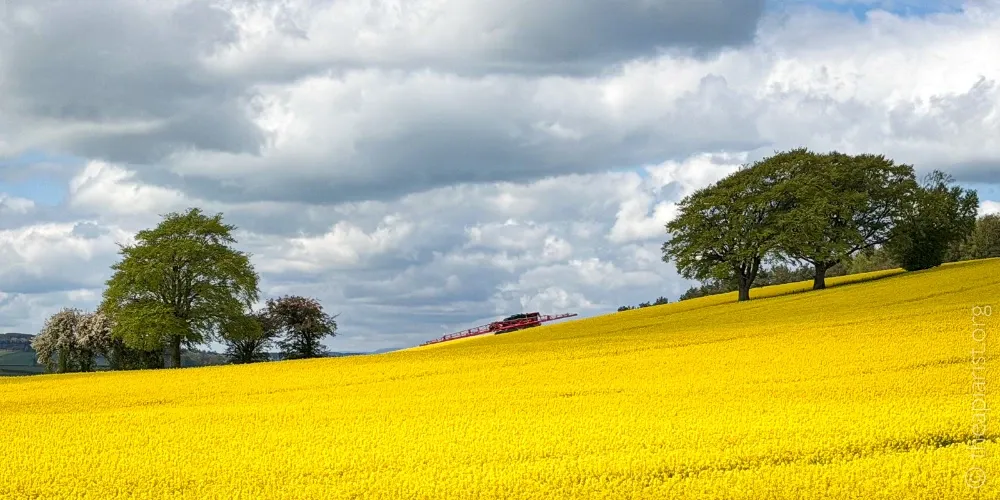
In these areas, while the willow and gorse start the colonies off in the spring, the hectares of dazzling yellow, nectar-rich, OSR flowers in April and May are the dominant influence on colony development.
And, once the OSR goes over, everything pretty much grinds to a halt if there are no alternate sources of nectar available.
This is the 'June gap', and the impact it has depends upon your location and your bees.
Touchy, touchy
One thing you may notice is that colonies become (more) bad-tempered.
I retrospectively inserted 'more' to remind you of the colonies that you really should be in the process of requeening because you've already identified their temperament is homicidal less virtuous than it should be.
All my colonies were within reach of OSR during May, though some were closer and worked it almost exclusively. Now the OSR has finished, all seem a little more resentful of my 'frame-fumbling', though none have disgraced themselves sufficiently to end up in the 'naughty corner' or, worse, under special measures.
However, I have acquired a queenright nuc from a colony of absolute monsters.