Whose swarm is it anyway? - part 1
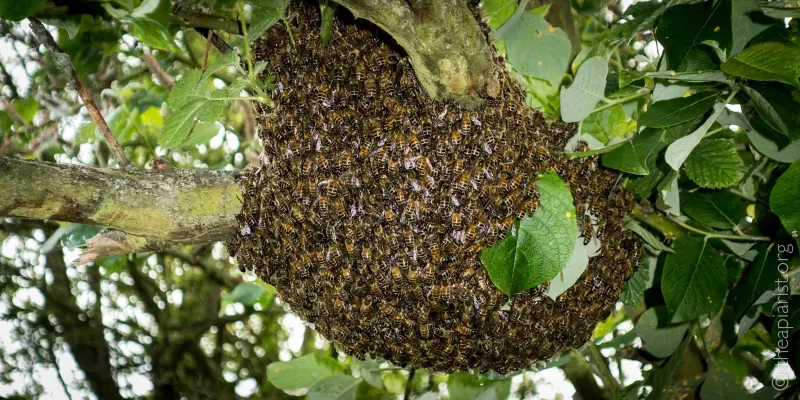
I was originally going to title this post “It could be you”, but I wanted to include the word 'swarm' and hint that the source of a swarm is often not known.
Most responsible beekeepers reading The Apiarist probably conduct thorough, regular, inspections and clip their queens. They apply swarm control promptly when it is needed.
Those that don't, lose swarms {{1}}.
I am not intending to discuss ownership of bees or swarms. If they're in your hive, they're your bees. If they've swarmed, and left your land, then all bets are off. Anyone trying to claim ownership of a lost swarm, before it is safely hived again, is probably wasting their breath {{2}}.
Instead, I intend to discuss whether you want to own the swarms that you are asked to collect, or that you attract to the bait hives you set out.
More specifically, I'll be discussing reasons why the last thing you might want is ownership, but that not taking responsibility for the swarm is either foisting the problem on someone else, or storing up problems for you (and other beekeepers) in the future.
And that's because today I'm going to discuss pests and pathogens associated with swarms, covering Varroa briefly (as it will always be present, and is trivial to deal with), and the foulbroods in more detail.
Be warned … at the end of part 2 of this topic I'm going to discuss euthanising swarms. Please do not bombard me with comments about “saving the bees” {{3}}. Honey bees do not need saving. There are too many of them in some environments, and any swarms carrying foulbroods threaten the survival of all colonies within range … managed or otherwise.
But what is 'within range'?
That's what I'll first focus on, because you need to know that to determine whether you are at risk.
Sponsors get more … posts, news, and information on the science, art, and practice of sustainable beekeeping. They also have access to over a decade of legacy posts, and ensure The Apiarist continues to appear every week.