Alternate to exterminate
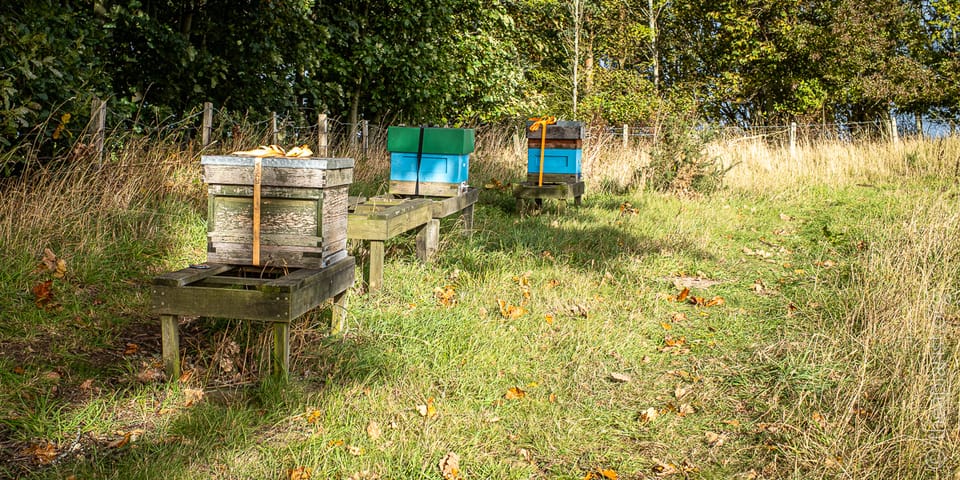
My final dive into a brood box of the season is for the removal of the Apivar strips at end of the late-summer miticide treatment. Typically, this occurs in early- to mid-October, and I'll choose early afternoon on a warm day when the bees are still likely to be foraging.
That wasn't a problem this year as the weather is still unusually warm, and the bees remain preoccupied with the Himalayan balsam in the valley bottom. Every third or fourth returning bee bore the characteristic broad pale thoracic stripe indicating where they'd been foraging. There was also a lot of yellow pollen being brought back, perhaps gorse or ivy.
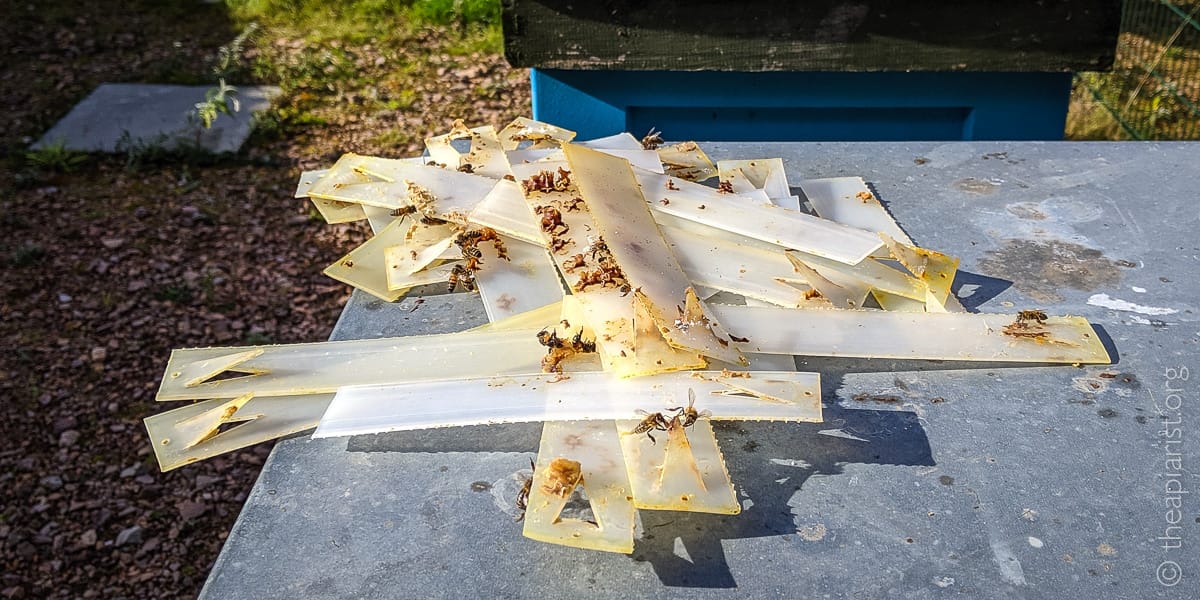
Apivar treatment should take 8–10 weeks if there is brood in the colony … and there is during late summer and early autumn. When the strips were added (the 5th of August), many colonies had 7–9 frames of brood. Since then, the brood nest has gradually contracted, and those I inspected had no more than 2–3 frames of brood, and many less.
This contraction of the brood nest will continue as the weather cools. We have yet to have any overnight frosts, but the last couple of nights have reached low single-digits (°C), so it probably won't be long. The bees will be clustering overnight, and the laying rate of the queen is dropping fast.
Why not sponsor The Apiarist?
Sponsors of The Apiarist receive a newsletter on the science, art, and practice of sustainable beekeeping every week, at least 50% of which are for sponsors only. Sponsorship supports my research and writing, and costs about the same as a coffee and doughnut a month, or less annually … go on, you know it makes sense.
Oxalic acid
Once the colonies are broodless, or are just ticking over with minimal levels of brood, I'll treat with oxalic acid (OA).