Did the treatment work?
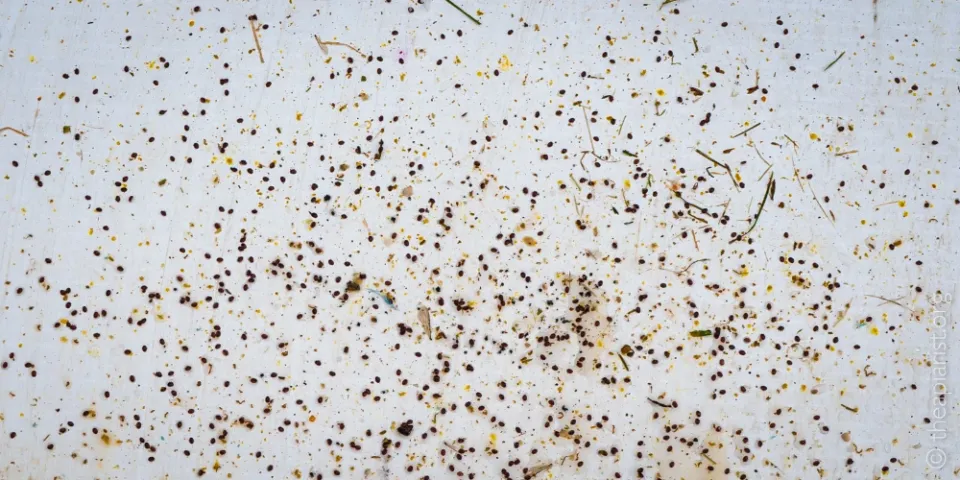
Did the miticide treatment work?
A simple enough question, but not one that's straightforward to answer.
What is meant by work?
Does it mean 'kill mites', or does it mean 'prevent the overwinter loss of the colony'?
The latter involves the former, but the former does not guarantee the latter.
How can something work, but not work?
You can kill easily thousands of mites in a heavily infested colony, but the colony will still perish if the mites were killed too late in the season to benefit the bees.
For example, if you add Apivar strips to a previously untreated colony in early November you'll often see a distressingly high number of dead mites fall through the open mesh floor (OMF) {{1}}.
I've seen colonies where I could use a finger to trace patterns through the countless mites that accumulated on the Varroa tray within 48 hours of applying the strips. My research students refused to count a mite drop of more than 2,500 mites per day, simply recording the colony as +++. We even tried weighing the piles of mites rather than counting them {{2}}. These colonies almost always perished during the winter {{3}}.
Why not become a sponsor?
This post is for sponsors only. Sponsors receive weekly posts on bees and beekeeping, ~50% of which are only for sponsors. Sponsorship costs less than a coffee and a slice of flapjack a month … or less for an annual membership.
This is an example of the miticide treatment working (i.e. it killed mites), but — paradoxically — not working (i.e. the colony died).
In contrast, conduct a shook swarm on a heavily infested colony in July, and treat the resulting broodless population with a miticide. You may again see a very high mite drop if the colony is heavily infested, but they will almost certainly survive the subsequent winter with no further treatment {{4}}.