Odds and ends
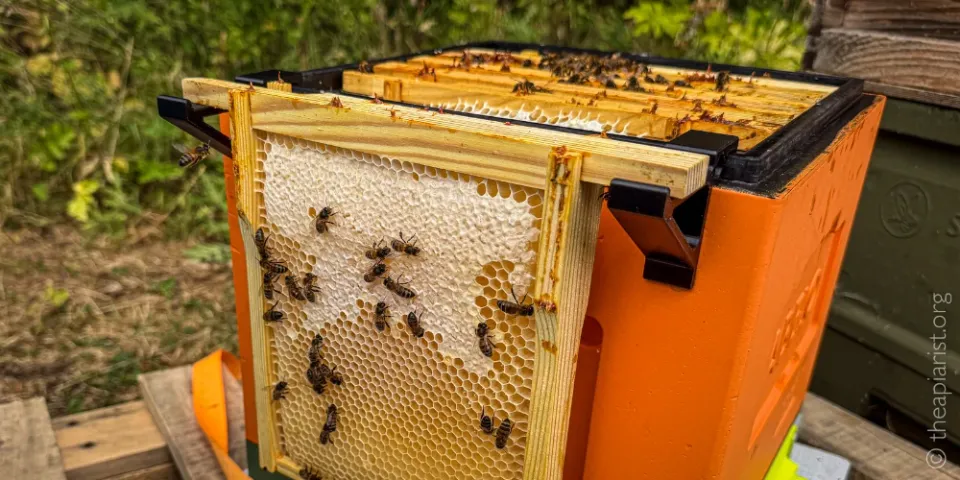
“This is the way the season ends, not with a bang but a whimper”, with apologies to T.S. Eliot {{1}}.
A few weeks ago I felt I was struggling to keep up, now I'm looking for things to do.
Well … almost 😉.
Beekeeping is a seasonal activity. In my part of the world, I'm busy from early April until late August.
In some seasons things start early, bringing March into play.
In others — like this year — they end prematurely.
The prolonged drought conditions that prevailed during the summer brought forward the flowering of many sources of forage, and simultaneously put paid to any chances of a good crop from the late-season heather.
As a consequence, the summer honey supers were filled by late July, and removed in the first days of August. This is almost a full month earlier than last year, which (admittedly) was later than usual as the farmer planted a big field of late-season Phacelia which was too tempting to ignore.
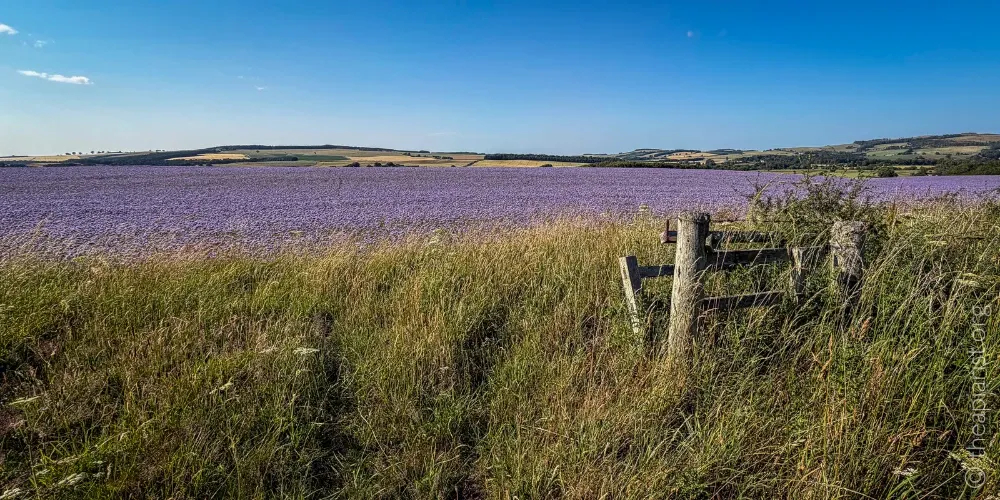
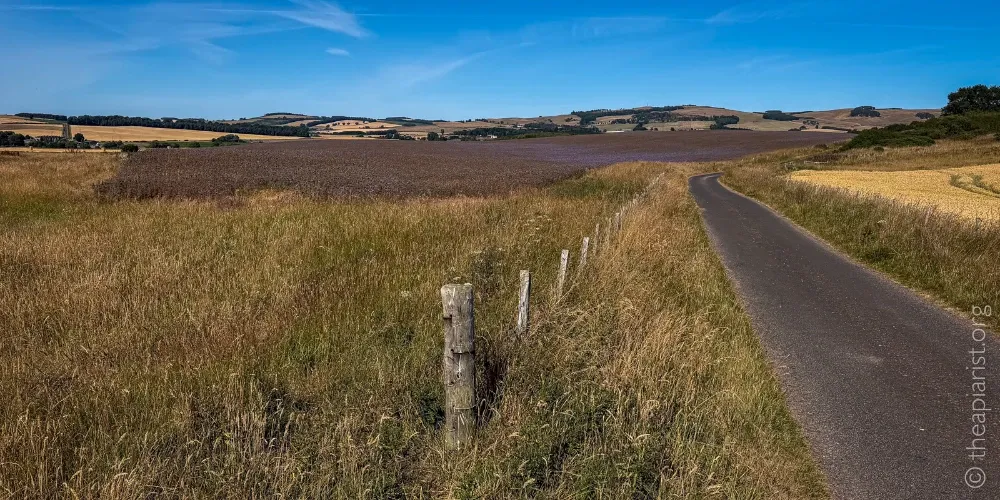
Two photographs of a field of Phacelia taken 11 days apart (on the 8th and 19th of July).
This year, the Phacelia was spectacular in early July, but largely over by the third week of the month. Inevitably, I delayed taking the supers off in the hope that the bees might do something useful with the rosebay willow herb, but I needn't have bothered.
The supers came off a week or so later {{2}}.
In a 'normal' season (i.e. one involving rain) I'd then expect a couple of days of frantic preparation before taking the bees to the heather. However, a reconnaissance trip showed the moors were parched and brown, with barely a trace of purple.
After a day or two of “Will I? Won't I?”, I decided to not bother this year {{3}}.
About 50% of content on The Apiarist is for the paying 'sponsors' of the site who ensure the lights stay on, the servers are backed up, and my coffee machine continues bubbling away while I write. Without sponsors, the coffee would not exist, and nor would the site.
If you're not a sponsor, you're probably missing the best bits 😉.
The majority of colonies were given fondant and Apivar, and left to get on with things … leaving me just a few odds and ends to deal with.
Primarily these were colonies where the queen status was unknown … either large colonies I'd requeened, or that appeared to be superseding, or queens in mating nucs that I was waiting to start laying.