Half-time
Heatwave 2.0 has been and gone, Prime Minister 9.0 appears to have been (amicably?) decided {{1}}, and the newspapers have instead reverted to saturation coverage of the 'soccer' World Cup.
In the hope of also attracting some errant Google search activity I've used a sporting term for the title of the post, though it was primarily chosen to reflect the stage we've reached in the beekeeping season.
The June gap has closed again. It wasn't very protracted, and most colonies continued to find bits and pieces to forage on. The only ones that needed feeding were mini-nucs and my queenright cell raiser. The former because the foraging workforce is simply too small, and the latter because any break in nutrition — at least during the ~5 days between grafting and the new cells being sealed — is likely to result in sub-par queens.
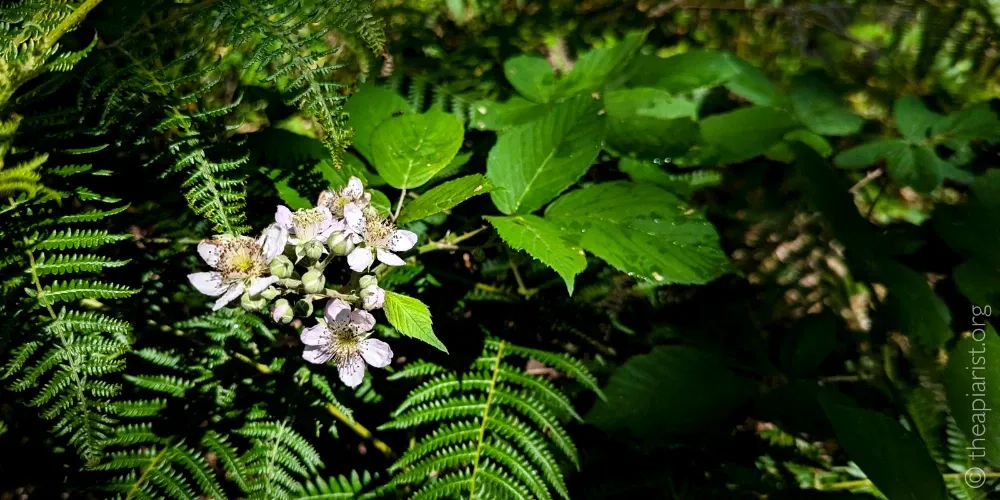
The blackberry is now flowering well, and it's probably the start of the main summer nectar flows. I say 'probably' because this is only my second full season in the Scottish Borders {{2}}, last year was far from typical, and so I don't have a lot to go on.
At least, I hope it was atypical, because the 2025 summer yielded little honey 😞.
This time last year the supers on my colonies next to 25 acres of brightly flowering Phacelia remained echoingly empty.
The crop flowered from late-June for about a month.
It yielded nothing.
In contrast, a few weeks later after a bit of summer rain, some late-sown Phacelia near another apiary produced a reasonable crop in late-August, but those supers didn't come off until early September.
This causes two issues; it overlaps (completely) with the heather, and it's getting late in the year to apply miticides to protect the developing winter bees.
If you want to avoid the AI 'slop' that increasingly contaminates beekeeping websites then please consider supporting The Apiarist. Sponsors ensure the continued existence of the site, and receive regular sponsor-only content. Claude is super-polite, but struggles to mark queens or find day-old larvae, so why trust its (his?) judgement when seeking information or entertainment on the science, art, and practice of sustainable beekeeping?